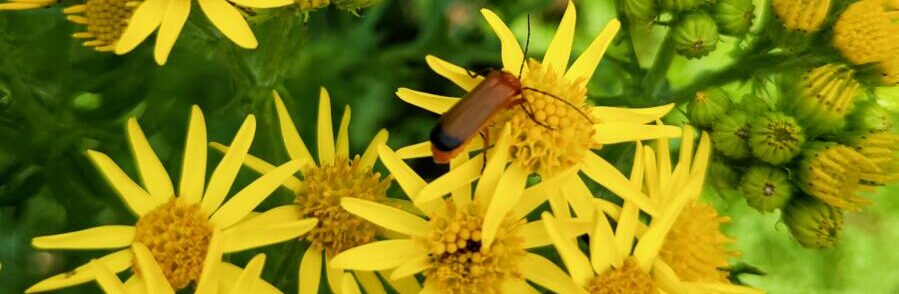

Dragonflies and damselflies are stunning! They are brightly coloured, amazing flyers, fiercely territorial and fearsome predators – both as adults on the wing or as nymphs in water.
One of the most exciting things about putting in the new ponds was how quickly these wonderful insects discovered the ponds and made them home.
Both dragonflies and damselflies are members of the Odonata order of insects, both have 2 pairs of wings and catch their insect prey in flight using modified front legs as ‘killing baskets’. So how do they differ?
Dragonflies are generally larger with 2 pairs of unequal sized wings and they rest with wings outstretched.
Damselflies are smaller and daintier with 2 pairs of equal sized wings which they fold along their backs at rest.
So far we have had 5 species breeding in the CWF ponds: 4 dragonflies – emperor, broad bodied chaser, four spotted chaser and common darter – and 1 damselfly, the common blue.
Emperor dragonfly
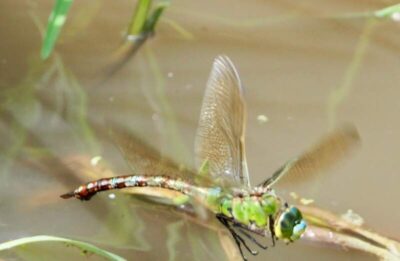
female emperor
The largest British dragonfly and often very curious, flying to investigate or inspect visitors – even people.
This was the second dragonfly to find us. They bred successfully as the discovery of the large nymph or larva in the pond shows. They emerge in late spring.
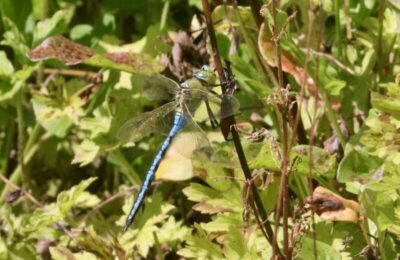
male emperor
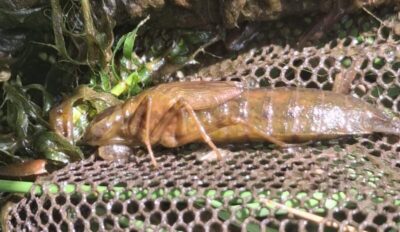
emperor dragonfly nymph or larva Photo by Brenda Cameron
Broad bodied chaser
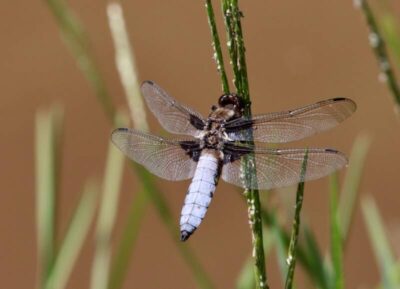
male broad bodied chaser
A distinctive medium sized dragonfly which is common and often one of the first to colonise new ponds.
Four spotted chaser

male four spotted chaser
First seen here in 2023, it resembles a female broad bodied chaser. The female lays eggs in flight, flicking them into water.
Common darter
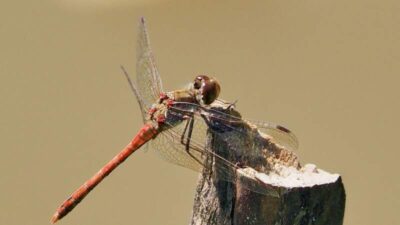
Common darter
A smaller dragonfly and the first species seen here, it is common and often an early visitor to new ponds.
It may be seen flying as late as December.
Common blue damselfly
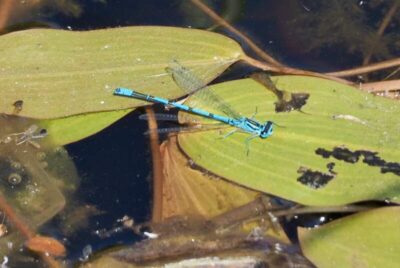
common blue damselfly
One of the commonest and often the most abundant damselfly.
They mate in flight and the female lays her eggs while mating.
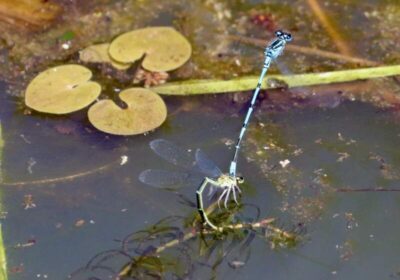
common blue damselfly egg laying
Andrew Scott
All photos by the author except where noted.