Moths are magic!
Butterflies get all the attention, fluttering about showing off in the daytime and getting noticed, but it’s moths that are the really important insects.
Ecologically and economically moths are of enormous importance but they don’t get the fame they deserve because they are mostly active at night.
There are only around 60 species of butterflies in Britain but there are around 2500 species of moths.
Oak trees in Britain have over 300 species of moths associated with them, birch trees over 120 species, and willow trees ‘dozens’ of associated moths. It is these caterpillars that feed blue tits, great tits, and many other birds. It is moths, too, that cause huge damage to forestry trees, and to our clothes and carpets in the home.
Butterflies and moths are both members of the Lepidoptera order of insects which means ‘scaly wing’ and both are important pollinators of plants which they visit to feed on nectar from the flowers.
They differ in three ways: in their activity by night or day, in the shape of the antennae (butterflies’ are clubbed, moths’ are feathery), and in the resting position of their wings (butterflies mostly rest with wings closed). These are simplifications of course – there are many day-flying moths – but they are useful.
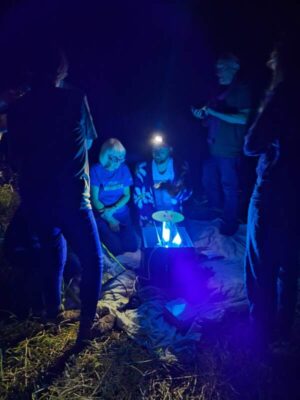 In the past year the Friends group has been organising Moth nights in the summer months when we set up a moth trap – a bright light to attract moths – and this has enabled our ecologists, Matt Jones and David Holland, to survey the moths at Childwall Woods & Fields.
These are just some of our moths that have been found at CWF (don’t they have fabulous names?!):
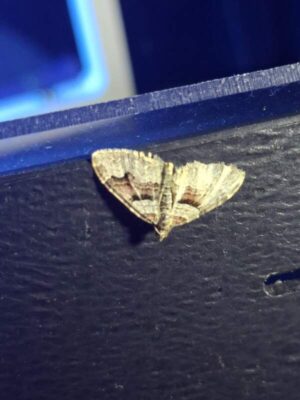
flame carpet
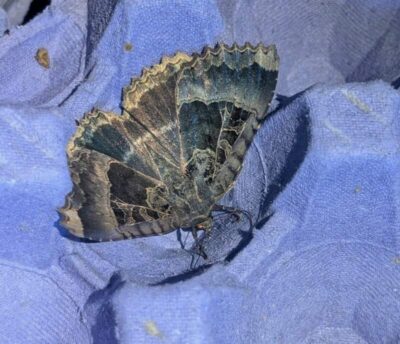
old lady
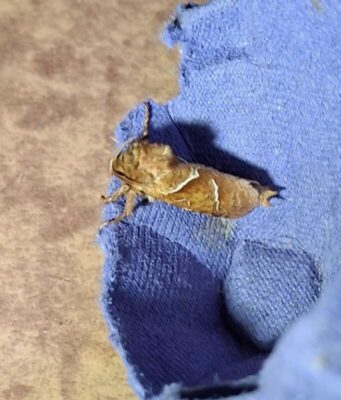
orange swift
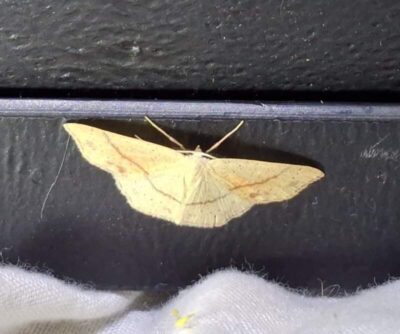
maidens blush
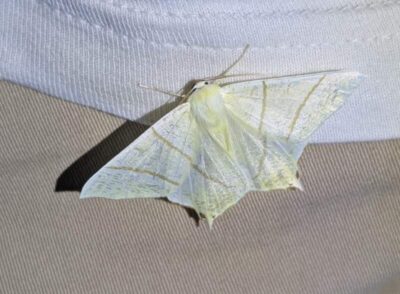
swallowtail
Andrew Scott
Photos by David Holland.