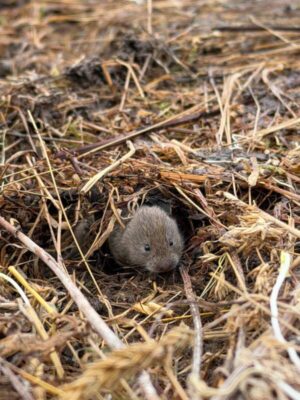
Field vole photo Tom Marland
Childwall Woods & Fields is teeming with mammals! We know this from our recent survey using footprint tunnels (more on this below). But you are unlikely to see most of these animals. Small mammals are naturally wary of people and dogs, and are keen to avoid being eaten by birds of prey or foxes. So they spend their time hiding in tall grass and bushes, or they are active mainly at night.
We also have a healthy population of bats on site but as these appear at nightfall you are unlikely to see these either!
The mammals we have identified so far are: field vole, bank vole, wood mouse, common shrew, grey squirrel, and fox. Using bat detectors during our night walks we have identified three species of bats – pipistrelle, soprano pipistrelle and noctule.
In addition, we suspect that weasel and hedgehog are present because they have been found in nearby gardens. Have you seen either of these at Childwall Woods & Fields? If so can you let us know? Given they are found everywhere, it would also be no surprise if rats were resident here.
Voles
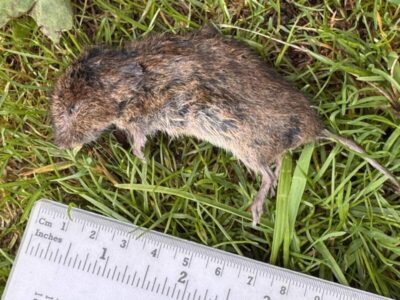 Field voles are the dominant rodent in grasslands where they create networks of shallow runs or tunnels in or under the grass. They are active day and night and feed on vegetation. They are the main prey of owls and kestrels. This dead field vole was found by a path.
Bank voles are found mainly in woodlands. They are active day and night and are agile climbers in bushes and brambles seeking seeds, fruit and insects. They nest in logs or tree roots.
Wood Mouse
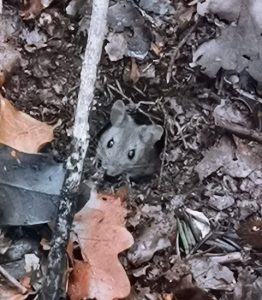
The wood mouse or long tailed field mouse has larger eyes and ears, and a longer tail, than its house mouse cousin. They are the dominant rodent of woodlands and are very agile climbers. They are mainly nocturnal and feed on seeds such as acorns and beech mast, fruit and insects.
Shrews
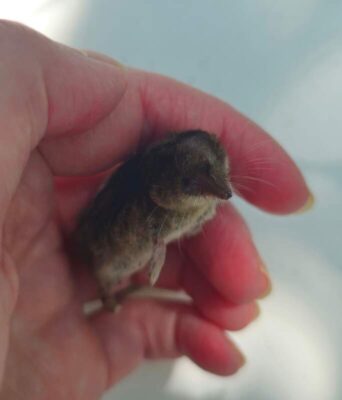
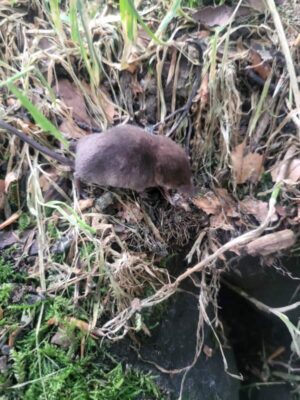
Shrews are tiny, barely the size of your finger, as these photos of a common shrew show. The Wildlife Trust describes the common shrew as “a small, insectivorous mammal, with tiny eyes and a large nose giving it keen sense of smell. Shrews snuffle through the undergrowth for their prey, which includes earthworms, spiders and insect chrysalises. They can be found in most habitats, but prefer woodland and grassland. Active by day and night, they are very territorial and aggressive for their size and can sometimes be heard fighting, their high-pitched squeaks particularly noticeable during the summer”. They are also a staple food for birds of prey.
We suspect that the equally widespread and even smaller pygmy shrew is also present at Childwall Woods & Fields.
Grey Squirrel
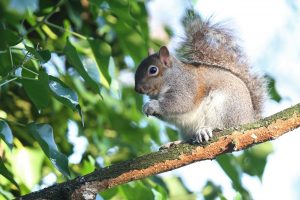
Grey squirrels need no introduction – they can be found throughout the Childwall Woods & Fields nature reserve, and in most surrounding gardens where their antics and ingenuity in raiding bird feeders are legendary.
What is less known is that they can be very destructive in woodlands because they strip the bark from young trees.
Fox
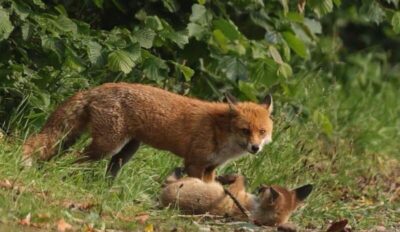
Another well known animal needing no introduction, the fox is increasingly seen wondering the streets of this area or even lying in the sun in a garden. They are generally solitary and very versatile in their diet. Mostly they eat small rodents but they will also eat seeds, berries and worms – and whatever they can scavenge in bins or on the street.
Bats
Our common pipistrelle, soprano pipistrelle, and noctule bats are all nighttime insect eaters that find their prey in flight by echo location. They rest by day, or hibernate over winter, in crevices in hollow trees and a site such as Childwall Woods & Fields with its numerous old veteran trees is therefore ideal.
Pipistrelles are tiny, one can fit in a matchbox, but this doesn’t stop them eating up to 3000 insects a night. Bats are almost impossible to identify in flight. We have identified them using hand held bat detectors that convert the bats’ distinctive ultrasonic calls into sounds we can hear and recognise. A good place we have found to glimpse them is on the top field near the ponds.
Mammals in the food chain
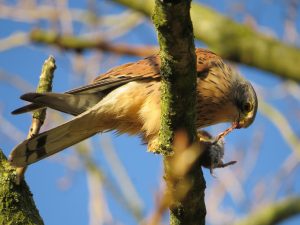
I said above that we are generally unlikely to see most of our mammals – except for the squirrel – they are so wary they hide. Sometimes we might get lucky and see a kestrel devouring a field vole, as Mike Barlow did here.
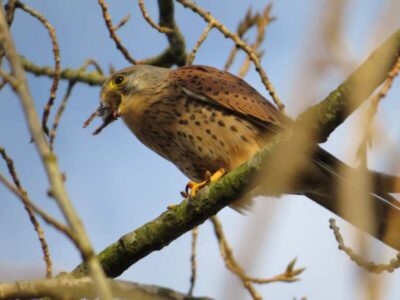
Kestrel eating a field vole. Photo Mike Barlow
Another way of identifying mammals is by looking at the remains contained in owl pellets. Our resident tawny owls feed mainly on rodents. The bones that they can’t digest they regurgitate as pellets (below) which can be found below the trees where they roost.
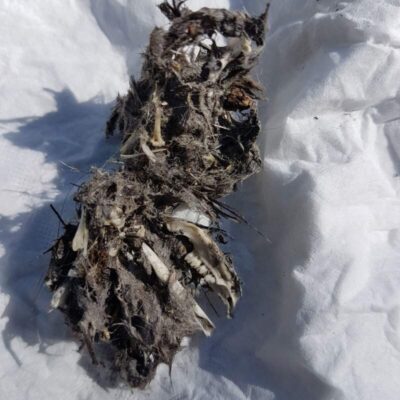
Tawny owl pellet. Photo Brenda Cameron
For some time trustee Brenda Cameron has been collecting and analysing these owl pellets with the help of Merseyside Biobank.
The jaw bones (below) are particularly useful in identifying what the owls have been eating. These are vole and mouse jaws.
Shrew teeth are particularly distinctive because of their red or dark tips (below).
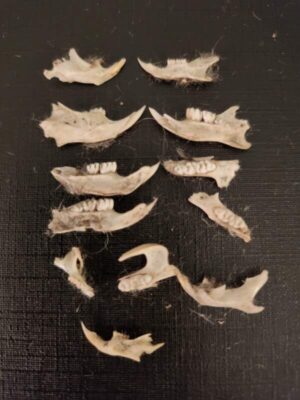
Mouse and vole jaw bones from tawny owl pellet.
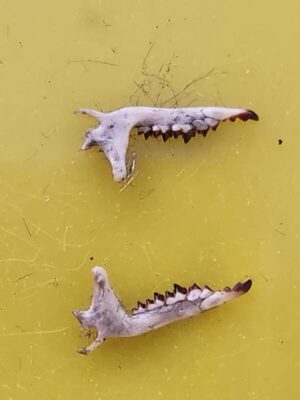
Shrew jaw bones from tawny owl pellet. Photos Brenda Cameron
Surveying mammals using footprint tunnels
Another way of identifying shy animals such as small mammals is to use footprint tunnels. These are 40cm sections of drainpipe with a slat of wood inside, on which is a piece of white card with ink pads either side. Like us, rodents are inquisitive and like to explore. When they find the tunnels they wonder through leaving a trail of inky footprints on the card.
This is a tunnel sited at the base of an apple tree in the orchard on the middle field and a typical footprint trail with wood mouse tracks.
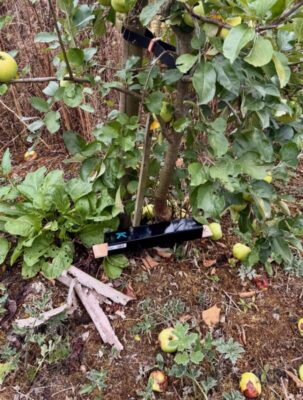
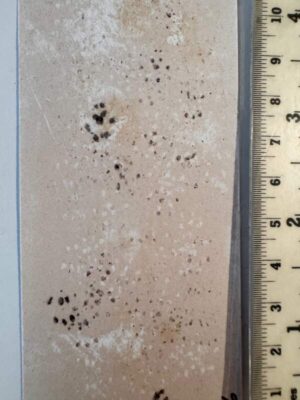
wood mouse footprints
Brenda made and placed 20 footprint tunnels at different heights in Childwall Woods between June and August. Trustee Andrew Scott made a further 20 footprint tunnels and placed these in Childwall Fields during August.
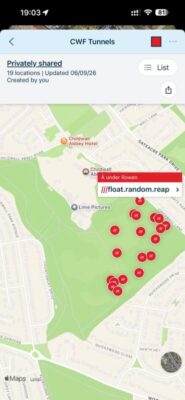
Locations of footprint tunnels on Childwall Fields
It is this wide coverage across the CWF site, in different habitats and vegetation types, that enables us to say confidently that the reserve is teeming with mammals.
Andrew Scott